Better to stay in the EU

12 December 2018

Here are three reasons why leaving is such a bad idea, and staying in the EU would be better for Britain:

  1. When you're in trouble, it is better to stay together.
  2. You can’t ‘take back control’ in a connected world, where everyone is connected with everyone else. You have to work together.
  3. The Brexiteers want to go off on their own, but have no idea where they are going.

Does this make sense? If so, tell your friends and pass it on.

Winning the Peace: now available in paperback

3 December 2018

My first book, Winning the Peace: The British in Occupied Germany 1945-1948 has now been published in paperback.

You can order it, if you wish, from the Bloomsbury academic website.

The list price is £28.99, much cheaper than the hardback, and there are discounts if you order online.

Transforming Occupation in the Western Zones of Germany – the book

29 August 2018

My second book, an edited collection with contributions by sixteen international scholars from Britain, the USA, Germany, the Netherlands and Australia – all experts in the subject of military occupation and its social, political, economic, cultural and legal implications – is published this month by Bloomsbury Academic.

The idea for the book originated at a conference held at the German Historical Institute London in September 2016, that I organised jointly with a colleague, Camilo Erlichman, now Assistant Professor in History at Maastricht University. Camilo and I are the joint editors of the book and we wrote the first, introductory chapter on ‘Reframing Occupation as a System of Rule’. 

It seemed to us that when people write about a country or part of a country occupied during or after a war – such as Germany or Japan after the Second World War, the occupation of the Rhineland after the First World War, the wartime occupations by Germany of France, Belgium, the Netherlands, Denmark, Norway and much of Eastern Europe, or the more recent military occupations of Iraq or Afghanistan by the United States, to give just a few out of many possible examples – they normally treat the subject as an isolated, individual case, without thinking about military occupation as a subject in its own right, as a system of rule, with certain characteristics that apply to all cases, just as other systems of rule – such as liberal democracies, absolute monarchies, military dictatorships, or imperial colonies – also share certain characteristics.

Of course, different cases of military occupation are experienced by the local population, and by the ruling occupiers, in very different ways. Some occupations are oppressive and highly destructive; others are relatively benevolent. Some are very short, lasting only a few weeks or months; others can last for years or even decades. But in our view, we need to ask similar questions about all, and our understanding of any one case of occupation can be improved through comparing it with others. For example, questions that can and should be asked about all cases include:

– What were the origins of the occupation, how and why did it arise?

– How did the new rulers, the occupiers, manage the legacy of the previous regime that has now been superseded by the occupation?

– How did the local population respond to the occupation, did they cooperate, or resist, or both?

– What strategies of rule were adopted by the occupiers in order to maintain their power and authority, and establish their legitimacy as rulers?

– What legal framework did they adopt?

– What was the experience of daily life under occupation, for both occupiers and occupied?

– How did personal relationships between occupiers and occupied evolve, at all levels of society?

– How did the occupation evolve over time, and eventually end, how was power devolved or transferred from occupier to occupied?

– Did some social groups win or lose from the occupation?

– What were the most significant legacies of occupation – social, political, cultural and economic – for the countries concerned?

These are some of the questions we tried to address in the book, in the case of the three western zones of Germany, occupied by the United States, Britain and France after the Second World War.

Transforming Occupation in the Western Zones of Germany is an academic publication and priced accordingly, which means that it will be bought mainly by university libraries and other institutions, and read by students of the history of Germany and post-war Europe, and more generally, by researchers exploring occupation as a subject in its own right.

If you are interested and would like to know more, you can read the contents and the first chapter, written by Camilo Erlichman and myself, online, entirely free of charge. Follow the link at the end of this post.

And if you would like to read the whole book but cannot justify buying your own copy, please do request a copy from your local library?

Here are some extracts from early reviews of the book:

This is an exceptionally valuable volume that brings together a first-rate group of historians. It belongs on the bookshelf of anyone interested in postwar Germany or the long legacies of the Allied occupation.’

Adam Seipp, Professor of History, Texas A&M University, USA.

This outstanding collection sheds fascinating new light on many diverse aspects of the occupation of Western Germany after 1945. More than this, however, it asks that we rethink out understanding of occupation in modern history in more general terms. As such it will be crucial reading for scholars of political transition in a wide variety of different fields.’

Neil Gregor, Professor of Modern European History, University of Southampton, UK.

Often casting a critical eye on the planning and practices of the western powers, the authors recount fascinating stories of conflict and cooperation between victors and vanquished that reveal the contingency and complexity of the history of occupied Germany.’

Timothy Schroer, Professor of History, University of West Georgia, USA.


Transforming Occupation in the Western Zones of Germany: contents and first chapter

Order a copy from the publisher’s web site 


History & Morality – some guiding ethical principles

22 June 2017

As suggested by the name of this blog, I take the view that the role of history is not to judge, but to try to understand the past ‘how it really was’. What right have we to judge the actions of people who lived in times that we, with the privilege of hindsight, in the relative prosperity of early twenty-first century Western Europe, are fortunate never to have directly experienced ourselves?

But I also take the view (as discussed in an earlier post on History & Policy) that history can help us understand, and so help resolve, some of the problems that we face in the present. Although it is not for us to judge if people were right or wrong in the past, we need a sense of morality, together with an accurate understanding of what happened in the past, to help determine what we should do in the present and future.

This, of course, is to enter the domain of ethics, rather than history, so I have outlined below some ethical principles for assessing the relevance of the past to the present. These principles are expressed in my own words, as a form of personal morality, on the basis that as rational human beings, we can work out what is right for ourselves without having to resort to external authority, religious belief, custom or tradition. But at the same time the principles assume that everyone is different, and we can all work out our own personal morality, in our own way, for ourselves.

The principles owe a great deal to the philosopher Immanuel Kant’s Categorical Imperative, according to which we should always act in accordance with what we, as individuals, should logically and rationally desire to be a universal law that applies equally to everyone.

The first four fundamental principles, in the spirit of the US Declaration of Independence, I take to be self-evident:

1) Liberty of the individual – to strive for personal fulfilment and the pursuit of happiness

As human beings we have instincts, wishes and desires, to seek pleasure and avoid pain, but we can also learn from experience. Everyone should be free to fulfil their desires, whatever they may be, and obtain the means to do so by their own efforts, subject to the three points below.

2) Empathy and respect for others (equality)

We are not all the same. Other people’s desires may be different from mine and are not necessarily better or worse than mine, just because they are different.

3) Cooperation for mutual advantage (fraternity or fellowship)

As social beings, we cannot live alone and we cannot fulfil our wishes and desires without help from others. Everyone should be free to receive help from and offer help to others, provided they do not exploit other people, or abuse any power they may have, to compel them to do so.

4) Freedom to resist exploitation and the abuse of power

If anyone attempts to exploit or abuse any power they may have, to prevent me from fulfilling my desires, or to force me to help them fulfil their desires, I should be free to choose whether to submit, or to resist any force they may apply. The same applies to everyone else. We should be free to decide for ourselves whether to submit or to resist, in any given set of circumstances.

These four fundamental (and in my view self-evident) principles have four further consequences, based on our individual and collective knowledge and experience:

Rule of law

The ethical principles outlined in the first four paragraphs above can best be preserved, so that we can collectively fulfil our desires without exploitation or the abuse of power, and resolve conflicts without the use of force, through (as Kant and many other ethical philosophers have proposed) creating universal rules (i.e. laws and customs), which apply to everyone equally.

Mutual agreements, creating duties and obligations

Although not everyone is able to think and act rationally, in my experience the great majority of people do, so it is possible to create an environment in which we can achieve many (if not all) of our desires and resolve conflicts through mutual agreements, which create duties and obligations. Such agreements may be explicit and enforceable by law, or informal customs and social conventions, such as being polite and considerate to others. These duties and obligations limit our ability to fulfil our own desires, and oblige us to help others fulfil their desires. Cooperation is better than conflict.

The inevitability of conflict and the use of force

My desires may conflict with other people’s desires. There will always be someone, or some group of people, who are stronger and more powerful than I am, so I may not succeed in forcing, or even persuading, other people to do what I want. Similarly, if I use force to resist exploitation or the abuse of power by others, this will make it more difficult both for them and for me to achieve our desires, regardless of which of us is stronger. If everyone acted rationally, it should be possible to resolve conflicts without the use of force. But the use of force may be necessary, in certain circumstances, to prevent the abuse of power, the exploitation of the weak by the strong, and to enforce universal rules, that apply to everyone equally.

Ethical realism and the creation of institutions to enforce the rule of law

I also know from my experience that people (including myself) do not always act rationally and agreements may be broken. Universal rules are not absolute. As the conditions in which we live change, rules may need to be modified so they continue to preserve the four fundamental principles and help to resolve conflict. Institutions and social structures may need to be created to make, modify and enforce the rules, but no set of institutions is ideal. There is no ideal state or society. Universal rules and institutions established to enforce them need to change as circumstances and conditions change over time.

There is therefore no absolute morality, which brings me back to the point that the role of the historian is not to judge, but to understand what people did in the past, in very different circumstances, and draw appropriate conclusions and learn what we can from this. History, in other words, is a dialogue between the past and present, for the benefit of the future. You could say that we need history to understand the past, and a sound sense of morality to understand the relevance of the past to the present, and help us all decide what needs to be done in the future.


List of posts: January 2017 – July 2011

10 May 2017

For anyone reading this blog for the first time, I completed a PhD in history as a mature student in 2014, and am now a Visiting Research Fellow at Kings College London. My book, Winning the Peace: The British in occupied Germany, 1945-1948, was published by Bloomsbury Academic in January 2017. In my view, history is a process of discovery. I started writing this blog in October 2005 and since then have posted around 140 articles.

I have listed below all articles published on this blog since 21 July 2011. For earlier posts, see:

Winning the Peace – the book 17 January 2017

A German museum director remembers the British 'Monuments Men' 10 September 2016

'The Bride's Trunk' – Marriage with 'ex-enemy nationals' (continued) 15 August 2016

'The Allied Occupation of Germany Revisited' 27 July 2016 

'How it really was' 10 years on, after the Brexit referendum 1 July 2016

Winning the prize of the German Historical Institute, London 26 November 2014

Harold Ingrams and the 'Aden Emergency' 17 March 2014

The four stages of competence; or how history can help stop us forgetting the fundamentals and throwing the baby out with the bathwater 20 February 2014

History and Policy 6 February 2014

'Infantilisation' and 'Echoes of Empire' 21 January 2014

'Operation Butcher' 1 July 2013

Marriage with 'ex-enemy nationals' (continued) 24 May 2013 

'Hunting for Democracy' (continued) 2 April 2013

Collective biography 8 March 2013

The Craft of Research 12 February 2013

Colonel E H D (Eric) Grimley: 'Hunting for democracy' 7 August 2012

'Winning the peace': attempting to explain some of the contradictions in British policy in occupied Germany, 1945-1948 1 March 2012 

International Socialists 5 January 2012

"We pour petrol on them" 21 July 2011


Winning the Peace – the book

17 January 2017

My book: Winning the Peace: The British in Occupied Germany 1945-1948 is published this month by Bloomsbury Academic. It is an academic monograph and priced accordingly, which means that it will be bought mainly by university libraries and other institutions and read by researchers studying the period.

But if you are interested, you can read the contents, introduction and first chapter online, entirely free of charge. Follow the link at the end of this post.

And if you would like to read the whole book but cannot justify buying your own copy, please do request a copy from your local library.

Here are some extracts from what it says on the back cover:

Winning the Peace examines the aims and intentions of twelve important and influential individuals who worked for the British Military Government in occupied Germany during the first three years after the end of the Second World War…

Winning the Peace strikes a balance between earlier self-congratulatory accounts of the British occupation, and the later more critical historiography. It highlights the diversity of aims and personal backgrounds and in so doing explains some of the complexities and apparent contradictions in British occupation policy…

This book is an innovative study for those interested in the Allied occupation, the post-war history of Germany and the study of military occupation generally.’

Reviews:

Approaching the British occupation regime in Germany through a range of biographies sheds a new light on the occupation regime itself … Christopher Knowles argues convincingly that the positive contribution of these people to the remaking of Germany after the Second World War should be recognised.’ Stefan Berger, Director of the Institute for Social Movements, Ruhr University, Bochum, Germany.

Investigating the collective biography of twelve officers, it considerably extends our knowledge of British policies by highlighting the wide variety of often conflicting ideas and strategies within the military and civil administration of Germany.’ Michael Schaich, Research Fellow and Deputy Director of the German Historical Institute, London.

Chris Knowles’ multi-layered appraisal of the aims, intentions and achievements of the British occupation of Germany through his examination of the diverse views and experiences of a sample of British generals, civilian administrators and young junior military government officers not only uniquely exposes and deconstructs the constraints on the occupiers and their potential for agency but also makes a significant contribution to the new field of occupation studies.’ Rebecca Boehling, University of Maryland Baltimore County, USA.

Winning the Peace: contents, introduction and first chapter

Order a copy from the publisher’s web site


A German museum director remembers the British ‘Monuments Men’

10 September 2016

On a recent visit to Germany, I was delighted to meet the distinguished art historian, Professor Johann Michael Fritz, an elderly gentleman, now 80 years old, who is an expert on medieval metalwork and an Honorary Fellow of the Society of Antiquaries of London.

Professor Fritz told me that his father, Dr Rolf Fritz, had been the director of Dortmund Museum from 1936-1966. The museum building was completely destroyed during the war, but the collection was removed for safe-keeping and stored in various locations around Germany.

After the end of the war, the collection was recovered, with the assistance of a number of British officers who worked for the ‘Monuments and Fine Arts’ branch of the Control Commission. The objects were taken to a nearby stately home, Schloss Cappenberg, where Dr Rolf Fritz organised exhibitions so that the collection was once again open for display to the public.

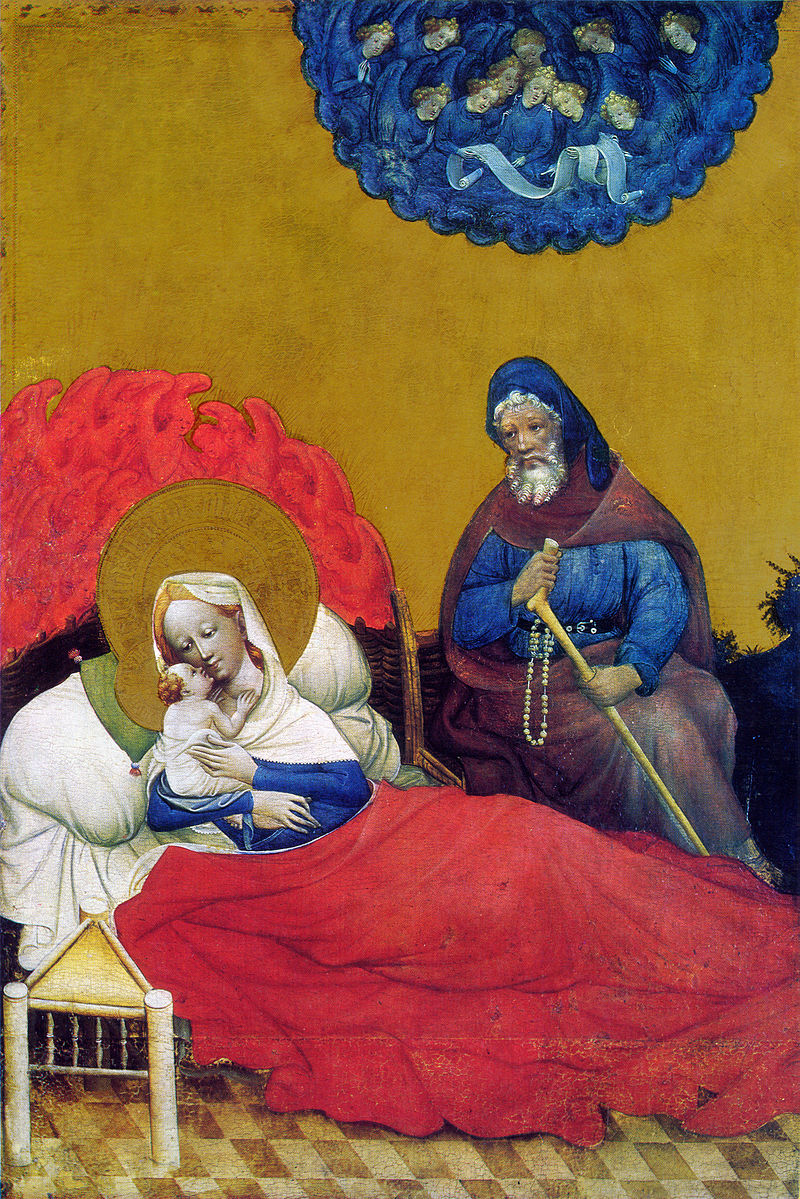
Some of the medieval works of art from Dortmund churches had also been removed and placed in storage depots. One of the most notable pieces recovered and displayed in Schloss Cappenberg was a late gothic masterpiece dating from 1420, a winged altar by Conrad von Soest, from the Marienkirche (St Mary’s Church) in Dortmund.
800px-Marienaltar-Linke-Tafel

The left wing of the Marienaltar by Conrad von Soest in Dortmund church (from Wikipedia).

Many years later, in 1990, Schloss Cappenberg was itself in danger after severe damage was identified, due to subsidence caused by extensive mine-workings underneath the building. It is located in the heart of the coalfields of the Ruhr. It has since been restored and is due to be reopened in 2017, after further renovation works have been completed.

In January 1991, a year before he died, Rolf Fritz wrote a letter published in the newspaper, the Frankfurter Allgemeine Zeitung. In the letter, he reminded readers of the role, now largely forgotten, of the British officers in recovering the collection and finding a home for it at Schloss Cappenberg, where it was displayed to thousands of visitors over the following years, before the museum re-opened in 1983, in a restored 1920s Art Deco building in the city of Dortmund.

The letter is reproduced below, together with excerpts from an article by Professor Fritz, describing how some of the relatives of the British officers involved heard about the letter and contacted his father, to thank him for remembering and acknowledging their contribution to preserving the museum’s collection of works of art, and enabling it to be displayed again at Schloss Cappenberg.

When I met Professor Fritz, I was impressed by two things he said. I asked him why it was important to spend so much time and effort recovering works of art, when the great majority of people at that time had more immediate needs; all were hungry, some starving, and many had nowhere to live. He replied, indirectly, by saying that he remembered visitors coming to the exhibitions organised by his father in Schloss Cappenberg, seeing works they remembered from years earlier, and saying ‘Die Sachen haben wir noch’ (these things – at least – we still have). When so much had been destroyed, and people had lost so much, they were grateful that some things, at least, had been preserved.

Professor Fritz also told me that, in his experience, a common interest in art is an excellent way of achieving international understanding (and reconciliation), as there are no language barriers and, sometimes at least, a shared love of the arts (or music) can bridge national, political, economic, and even cultural barriers.

The following is an excerpt from an article, to be published later this year, written in German by Professor Johann Michael Fritz. The article starts by reproducing the letter his father, Dr Rolf Fritz the former director of the Dortmund Museum, wrote to the newspaper, the Frankfurter Allgemeine Zeitung, in January 1991. The article also includes extracts from letters Dr Rolf Fritz received from relatives of the British Monuments and Fine Arts officers, who discovered his letter to the paper and wrote to thank him for remembering their contribution to the preservation of works of art in postwar Germany.


A reader’s letter and its consequences: on the work undertaken by English Monuments and Fine Arts officers in Westphalia after the end of the war, 1945.

By Professor Johann Michael Fritz

The events which are recounted here happened nearly seventy years ago. They took place in the years immediately after the end of the Second World War. But they were not entirely forgotten in the subsequent decades, thanks to an unusually long reader’s letter which was published in the Frankfurter Allgemeine on 16 January 1991. The author was Dr Rolf Fritz (1904–1992), then aged nearly eighty-seven. The letter reads:

‘The Saviours of Schloss Cappenberg

The essay in Bilder und Zeiten [the Frankfurter Allgemeine’s cultural section] “Seeing what our forebears once saw” in the issue of 8 December 1990, moved me deeply. I should explain who I am. I was from 1945 to 1966 Director of the Dortmund Museum of Art and Cultural History at Schloss Cappenberg. Recently there has been much discussion about the threatened destruction of the church and castle at Cappenberg through mining activity. But no one realises that after the war it was the English who prevented damage to the castle. This is what happened. Shortly after the end of the war, in May 1945, I had the difficult task of recovering and reassembling the extensive collections of the Dortmund museum, which were then at risk of further damage in the repositories to which they had been evacuated. The town of Dortmund was totally destroyed and nothing could be stored there, but an attempt had to be made to find a suitable place nearby. While searching I came across Schloss Cappenberg. Astonishingly, it remained undamaged, so I endeavoured to acquire it as a store for the museum collections. Opposition to this came from the English military government which wanted to requisition the large building as accommodation for mineworkers from the coalmines at Lünen, [whose houses had been destroyed in the war] while the local authority of Kreis Lüdinghausen urgently required it to accommodate its quota of refugees from Silesia. Against these demands the wishes of a museum hardly stood a chance. But the English military government had a Monuments, Fine Arts and Archives Department. It included Lieut. Col. Christopher Norris, an art collector and connoisseur, and the officers of his division: Major Robertson, in civilian life a lecturer in history of art at the University of Edinburgh, Major Murray Baillie, a member of an aristocratic family, and Major Mrs Westland, widow of an English general. All these officers were enthusiastically engaged in helping to rescue German monuments lying in the rubble, and rapidly joined forces with German museum and historical monument protection officials, as soon as these had returned from the war.

These English officers set to work with great energy, involving wearisome negotiations with English and German officials, and succeeded firstly in removing an English military unit, then in preventing the occupation of the building by refugees and miners, which, given the conditions at that time, would have involved serious damage to the fabric. Eventually [at the end of 1946] the entire castle (that is the central block and the west wing) was handed over to the museum as a depot and, as will be revealed below, as an exhibition space.

With their help it was also possible to organise the return of the collections from repositories scattered over the countryside. These men paid from their own pockets for the chemicals needed for the conservation workshop, which could only be acquired from abroad. This made it possible to begin work, even if only on a limited scale. With the officers’ help the altarpiece to the Virgin Mary [Marienaltar] by Conrad von Soest, which owing to its timely removal and storage had escaped the destruction of its church [the Marienkirche in Dortmund], was brought from the Lahn [in the French zone of occupation] to Cappenberg. It laid the foundations for the Conrad von Soest Exhibition in 1950, followed by numerous further exhibitions in the next decade. So one can rightly say that the survival of Schloss Cappenberg goes back to the initiative of those English officers – nearly all of them professional art historians – who regarded it as their duty to care for works of art and who felt such close links with their German colleagues that they energetically supported this difficult work in the first years after the war. Thanks to this support Schloss Cappenberg remained a site commemorating the Freiherr von Stein [its former owner, a Prussian statesman and administrative reformer] and became in addition a place for numerous and very varied exhibitions over many decades. Together with its precious church, it thus became a destination attracting many thousands of visitors.

Since then many years have passed and I can scarcely hope that those that gave their help at that time are still alive. I am all the more compelled to think of them with gratitude, as this help was offered at a time of great hardship, and particularly because what were then rescued – the castle and its jewel, the church of St Norbert – are today in the greatest danger.

Dr Rolf Fritz, Münster’

The article in the Frankfurter Allgemeine, to which the letter referred, and which prompted this letter, concerned the threat to Schloss Cappenberg and to the Romanesque church of St Norbert in its courtyard. A coalmine 1,000 metres below the building had caused such severe subsidence that there were fears that the church vaults might collapse. The letter which praised the English officers who had offered help immediately after the war, had mentioned four of them by name. Now something astonishing happened. Soon afterwards, several letters from Great Britain arrived, forwarded by the Frankfurter Allgemeine, from relations of the officers.

The first letter, dated as early as 13 February 1991 came from Lady Chapman, who had received a copy of Dr Rolf Fritz’s letter from the sister of Hugh Murray Baillie. Lady Chapman was the sister of Mrs Westland. Then on 7 April came a letter from Eleanor Robertson, the widow of Giles Robertson, and on 8 May 1991 a letter from Susan Hunting, the daughter of Christopher Norris. Some time later a letter arrived from Jerry Granger-Taylor, whom Rolf Fritz had no longer remembered. In these letters the English writers expressed their thanks and were clearly most delighted that some forty years later the work in post-war Germany by their relations, now all dead with the exception of Granger-Taylor, was so highly regarded by a German colleague.

Rolf Fritz replied fully to these moving letters, adding further details about their shared efforts to protect works of art.

His letter to Lady Chapman: 22 April 1991: ‘I well remember the collaborative work with the small group of English officers who had a small office in Münster and from there did all that was in their power to rescue old works of art, often in the face of incomprehension on the part of German and English officials. When the views of our English colleagues eventually prevailed, it was only due to their unwearying readiness to help. …. We always used the opportunity, in tours of the exhibitions and of the Romanesque church, to mention how grateful we were to the English officers for their help at Cappenberg. Despite all the difficulties, it was a fine time of shared activity. … It all happened more than forty-five years ago and most of the helpers are no longer among the living. But the memories of them and the feeling of gratitude for their help are still alive….’

His letter to Mrs Robertson gave further details:

‘Your husband then, that is in 1945, had an office in Münster in the building of the German army military intelligence, a building I knew well from the war years. I visited it often in my search for support for Cappenberg. It was by no means simple. But your husband managed to obtain a pass for me from the military government, with which I was able to travel in the luggage vans of the few trains then running. On one occasion the two gentlemen took me by car to Iburg, about 40 km from Münster as they wanted to see the castle and church. My wife lived there in a summer house in the wood, very primitive, but safe from bombs. In our poverty we had nothing to offer the visitors save for a few raspberries from the garden and some milk begged from a farmer. But they obviously enjoyed it more than the uniform army mess-food.

And I remember something else. The two officers came with me and a German driver to Burg Langenau an der Lahn, in the French occupation zone, where the museum had a depot. This was where the Marienaltar by Conrad von Soest from the Marienkirche in Dortmund was stored. The request from the two gentlemen that the French should return the altarpiece was successful and this made the later exhibition of the altarpiece at Cappenberg possible. I know that we drove to a French officers’ mess, where the English officers wanted to have lunch, while the driver and I had to make do with a piece of bread, as we were not allowed in the mess. But your husband was able to smuggle out a packet of sandwiches from the kitchen, which he brought to us in the car. At that time that was a big present…’

His letter to Mrs Hunting includes an account of a much appreciated study visit to England which Christopher Norris organised for Rolf Fritz and his colleague Dr Cornelius Müller Hofstede from Brunswick to see the ‘Cleaned Pictures’ exhibition at the National Gallery in London (1947-8).

‘It was a big discovery for us and an invaluable stimulus for our work. In addition, visits to other London museums and the hospitality of a club were most useful. During the war years and their aftermath we had lost contact with old works of art. Mr Norris was most helpful over all these visits, including one to the Director of the National Gallery, Mr Philip Hendy. But one of the very best memories of that time is of a trip with Mr Norris to Polesden Lacy, where he had a beautiful apartment with antique furniture in a delightful country house set in a large park. We found a table laid with valuable china and silver; Mr Norris had brought a roast chicken from London which was tastefully presented. After the celebratory meal we all went into the kitchen to do the washing up so that the china would not be handled by the cleaning woman. For us coming from a destroyed Germany, it was like a fairy tale, and quite unforgettable.'


I am grateful to John and Bridget Cherry, long-standing friends of Professor Johann Michael Fritz, for introducing me to this story and to Professor Fritz, and for translating the excerpt from his article from German into English.

Professor Johann Michael Fritz’s illustrated article will be printed and published in German later this year.


‘The Bride’s Trunk’ – Marriage with ‘ex-enemy nationals’ (continued – part 3)

15 August 2016

Who was the first serving British soldier or civilian member of the Control Commission to marry a German woman after the end of the Second World War? I first asked this question in May 2009 in a post on this blog on Marriage with ‘ex-enemy nationals’.

Around 10,000 British men serving with the armed forces or the civilian Control Commission married German women between 1947 and 1950. Until recently I thought the first couple to marry were Sergeant Harry Furness and his wife Erna Maria. He was a trained infantry scout and, shortly before the end of the war, had advanced far ahead of his battalion to see if the small town of Neheim-Hüsten was likely to be defended in a last-ditch battle, when he first spotted his bride-to-be hanging washing on a line. They were not able to marry until nearly two years later, in Lüneburg on 22 March 1947. Mr Furness told me their story in May 2013, after he and his wife, who were still both alive, had been married for 66 years.

A few days ago Jim Draper posted a comment on this blog, saying that his mother and father married a few days earlier than Harry and Erna Furness, in Wilhelmshaven on 10 March 1947. Both his parents have now, sadly, passed away, but they believed they were the first, or maybe the second serving British soldier and German woman to marry after the war.

Marriages between German women and British men serving in occupied Germany in the armed forces or the civilian Control Commission were forbidden after the war, but on 31 July 1946 a government spokesman, Lord Nathan, announced in the House of Lords that the marriage ban would be relaxed ‘in cases where the reasons for marriage are good and there is no security objection’. Approval from a senior military commander was still required and the couple had to face a series of strict conditions, including a ‘cooling-off’ period of 6 months from the date of application, when the man had to return to the UK (on his own) for his annual leave.

The regulations did not apply to those who had been demobilised and had already returned to civilian life. This explains why some marriages took place in Britain in January 1947 or even earlier, in 1946. British men were free to marry once they had left the armed forces, but their future wives still had to obtain permission to leave Germany. Renate Greenshields has described in her autobiography, Lucky Girl Goodbye, how she and fourteen other German women travelled to Britain on the ship the Empire Halladale on 18 December 1946, to marry British men they had met in Germany. Her wedding took place in Devon, on 6 January 1947.

This month, to coincide with the 70th anniversary of the announcement of the relaxation of the marriage ban, Ingrid Dixon has published a new book The Bride’s Trunk about her mother and father, who were married in Britain on 13 December 1946, a month earlier than Renate and her husband, Tom Greenshields, and three months earlier than Harry and Erna Furness or Jim Draper’s parents.

The Bride’s Trunk tells a fascinating and moving story. Ingrid Dixon’s mother, Minny (short for Wilhelmine), grew up in Aachen, near the border between Germany, Belgium and the Netherlands. Her mother’s father, Emil, was a trained mechanic who worked as driver and chauffeur for a wealthy industrialist and landowner who lived in a large country house near the city, but left it empty during the war. Emil and his family lived in a lodge on the estate.

Minny and her family had to leave home to avoid the fierce fighting that resulted in Aachen being the first city in Germany to be captured and occupied by the Allies, in October 1944. They returned home in May 1945, after the end of the war, to find both houses filthy and decayed, and much of the contents looted.

At the end of May 1945, when Aachen was transferred from the occupying Americans, who had first captured the city, to the British Military Government, a British Intelligence Unit requisitioned the large house as sleeping and eating quarters. A young soldier knocked at the door of the lodge and asked Minny in fluent German: ‘Could you make us a cup of tea please?’

Jim, the British soldier, came from Liverpool. His father had learned French and German while travelling and working in Europe before the war. Jim left school age 16 but, like his father, he was a gifted and self-taught linguist.

Minny, her mother and brother, were employed by the British troops to keep house and cook for them. By the time Jim was demobilised, the couple had decided to marry. They told their families of their decision in December 1945. Before he returned home at the end of April 1946, Jim wrote a signed and witnessed declaration of intent to marry Minny.

While they were apart, the couple wrote numerous letters to each other, each numbered to ensure none were lost or went astray. They were not able to marry until December 1946, when Jim returned to Aachen to collect Minny and take her to Britain. In the meantime, she had obtained a permit to leave Germany, as at the time, no German nationals were allowed to travel outside Germany without formal permission from the occupying authorities. She was told by the British Military Government official who interviewed her in Düsseldorf that she was the first German woman in the newly created Land, or administrative region, of North Rhine-Westphalia to be granted a permit to leave Germany to marry in Britain.

Jim died relatively early in 1972, but Minny is still alive, now well over 90 years old.

Ingrid Dixon has spent many years researching her parents’ earlier lives in Aachen and Liverpool, how they met and married, and the first few years of their life in Britain. She spoke to family members on both sides and discovered numerous letters and photographs to illustrate the book. She tells a very moving story, which demonstrates the extraordinary commitment that this particular couple, her mother and father, were prepared to make to each other, especially during the months of separation between May and December 1946.

She has given her book the subtitle: A Story of War and Reconciliation. Marriage implied a lasting commitment and required the consent of both parties. It was a public as well as a private act, involving family and friends as well as the two individuals most directly concerned. It also had legal implications, as the German women thereby acquired British nationality and the right to live in Britain. Marriage was therefore the ultimate symbol of personal reconciliation between former enemies, as attitudes changed on both sides, in the transition from war to peace.

References

Ingrid Dixon, The Bride’s Trunk (London and Cheltenham: Cloudshill Press, 2016)

Renate Greenshields, Lucky Girl Goodbye 
First published 1988

The National Archives, FO 1030/174, Marriages with ex-enemy nationals


‘The Allied Occupation of Germany Revisited’

27 July 2016

One of the main findings of the Chilcot Enquiry into the Iraq war was that preparations for the aftermath were ‘wholly inadequate’. To quote Sir John Chilcot:

‘Despite explicit warnings, the consequences of the invasion were underestimated. The planning and preparations for Iraq after Saddam Hussein were wholly inadequate.’

This is not surprising. As I wrote in a post in this blog back in 2008, soon after I had started researching the British occupation of Germany after the Second World War:

I need only mention the word 'Iraq' to make the point that what happens after the end of a war can be at least as important as what happens during the war itself.

And as Dr Peter Stirk, Senior Lecturer in the School of Government and International Affairs at Durham University, wrote in his book, The Politics of Military Occupation, published in 2009:

Military occupiers have been consistently inadequately prepared for military government, even on those occasions where they have recognised the problem in advance and made great efforts to prepare for it, such as the Allied occupation of Germany and Japan at the end of the Second World War.

I have written before on this blog, and in a policy paper for History & Policy on Germany 1945-1949: a case study in post-conflict reconstruction about some of the lessons we can learn from British experiences in post-war Germany that are relevant to contemporary operations, such as Iraq and Afghanistan.

But there were differences as well as similarities. In the case of the Allied occupation of Germany, there was no lack of planning. Extensive preparations were undertaken, but the situation changed. Once the war was over, Field Marshal Montgomery, the Military Governor of the British Zone of occupation, and his colleagues found that planning undertaken earlier, and the directives and instructions they had been given by the politicians in London, were completely inadequate for the conditions they found once they arrived in Germany.

It was not that the planning undertaken was bad or wrong. Some of it was very useful. But the planners made some incorrect assumptions, such as that there would still be a functioning central German government in existence at the end of the war, that would accept and implement instructions given to it to it by the Allies, acting jointly through the Allied Control Council in Berlin.

And the planners failed to anticipate what the situation in the British Zone of Germany at the end of the war would actually be like, for example that instead of taking over the richest, most productive part of Germany, much of the zone would be a heap of rubble.

The problem they faced was therefore not, as the planners had expected, to restrict the level of German industry, but to build it up, so that German exports could pay for the food imports necessary to prevent starvation. Until that was done, the zone was a liability rather than the expected asset, costing the British taxpayer £80 million a year, (a very large amount in those days). Most of the cost was for food imports from the United States, required to secure the very low levels of rations in the zone of 1,500 calories a day – half the average consumption in ‘austerity Britain’.

The Chilcot Enquiry is therefore correct, but only partially correct. The problem was not only the lack of planning for the aftermath of war, but a failure to recognise that the outcome was bound to be uncertain, that assumptions might prove incorrect, that the situation might change, and occupying forces would need to be prepared for, and would have to respond to, circumstances that could not have been predicted before the decision was taken to go to war.

Until recently, the Allied and especially the British occupation of Germany after the Second World War has been a neglected subject. After a flurry of activity in the 1980s after official documents were released to the archives, interest in the subject faded away.

Since the Iraq war of 2003, there has been a revival of interest in the Allied occupation of Germany. Academic researchers, not only in Britain, but also in the United States, Germany, France and elsewhere, are now actively working on the subject, many in new and interesting ways.

Some of this new research will be presented at a conference I am co-organising, which will take place at the German Historical Institute, London, at the end of September: The Allied Occupation of Germany Revisited.

The conference is fully booked, but if you are interested in the subject, have a look at the conference web site. The Call for Papers, first issued in November 2015, describes the rationale for the conference; the programme shows the topics that will be covered; and the site also includes links to some fascinating early films, that go some way to showing what life was actually like in Germany immediately after the war.

We hope the conference will help to stimulate further interest in the subject of the post-war occupation of Germany, but also in the topic of military occupation generally. For example:

  • Can different cases of occupation, such as the different zones of occupation in post-war Germany be usefully compared to each other, and to other cases of occupation, such as post-war Japan?
  • What has been the legacy of occupation?

And to bring us back to Iraq, what is the relevance of the past to the present and to the future? What can we learn from the Allied occupation of Germany that is still relevant today?


‘How it really was’ 10 years on, after the Brexit referendum

1 July 2016

After a gap of nearly two years I am restarting this blog.

10 years ago, in my first post, I wrote, following the great German historian Leopold von Ranke, that the role of history is not to judge the past, which has been and gone and cannot now be changed, but to try to see it ‘as it really was’ (wie es eigentlich gewesen), and understand it in its own terms. Only in this way, I suggested, can we learn lessons from history. Historical sources speak for themselves and do not need a historian to confuse the reader by over-interpreting them.

5 years later my views had started to change a little. After reading the sociologist Max Weber, I came to see history as a dialogue between the past and the present. I realised that it is not possible to understand the past without using theoretical concepts of some kind. These concepts help historians communicate what happened in the past to their readers in the present. For example the concept of ‘generation’ can help us understand why younger people, in general, at a particular time, may have thought and behaved differently from those twenty, forty, or sixty years older.

More recently, after working with the History & Policy project at Kings College London, I wrote about how studying history can help us understand and maybe help resolve, some of the problems we face in the present. In February 2014, in a post on how ‘unconscious incompetence’ can lead to unintended consequences, I suggested, taking an example from my own research, that history can help remind us of fundamental principles which may have been forgotten.

This all seems more relevant than ever, in the wake of the ‘Brexit’ referendum, in which a small majority those voting appear to have made it inevitable that Britain will leave the European Union.

For my PhD thesis ‘Winning the Peace’, I studied the years immediately after the Second World War, researching twelve important and influential British people living and working in occupied Germany between 1945 and 1948. As I wrote in my post on the ‘four stages of competence’, many of the fundamental principles which governed what they aimed to achieve, and why, and how this changed over time, now appear to have been forgotten.

‘My parents, and many others of their generation, believed that they had to do everything they could to prevent another war and another Hitler coming to power; that everyone, regardless of which country they lived in, should be able to lead a decent life free from fear of hunger, poverty, disease, or expulsion from their homes; that governments should be freely elected and should act in the interests of all those they represent; that minorities should have certain basic rights enforced by law, such as the freedom to speak their language and practice their religious beliefs.’

‘These principles were embodied in many of the institutions created during or soon after the war in Western Europe and internationally, such as, among many others, the United Nations, the European Union, the General Agreement on Tariffs and Trade (GATT), the European Convention on Human Rights and, in Britain, Oxfam and the National Health Service.’

Now, post-Brexit, it looks as if much of what my parents, and others of their generation fought for, will be carelessly thrown away by incompetent, irresponsible, or dogmatic politicians, who are steering the ship of state straight at the rocks, without even realizing what they are doing.

There has always been a rather nasty, nationalistic streak in British politics and society (as there is in the rest of Europe), but most of the time in Britain it’s been hidden and stayed in the background. Now it has come to the front. Think of Enoch Powell and his ‘rivers of blood’ speech, signs saying ‘no blacks, no Irish’the internment of anti-Nazi Germans, many of whom were Jews, after the start of the Second World War, the Notting Hill race riots of 1958, football hooligans, the murder of Stephen Lawrence, and attacks in the last few days on the Polish community in Britain.

This unpleasant nationalistic streak in British society was something that the British people I studied in occupied Germany fought against, despite or maybe because of their experiences during the Second World War. Most of them were internationalists. They valued their own traditions and tried to apply these in Germany where they could, but they also knew that British and Germans – and French and Americans and also Russians had much to learn from each other. 

My father and his colleagues would be horrified to know that all they fought for then, a peaceful world and international understanding and cooperation, above all in Europe, could all be so easily thrown away. But then, it is so easy to forget the lessons of history.